Your supply chain already produces the answers — are you using them?
Every supply chain runs on processes. And how well those processes perform directly affects cost, service levels, and working capital. The challenge? Many organisations still manage supply chains based on assumptions, static reports, or gut feel, rather than on how processes actually run.
The good news: you already have the data. Every transaction in your ERP, warehouse, and transport systems leaves a digital footprint. When used correctly, that data reveals where delays, inefficiencies, and unnecessary costs really come from.
This article shows four practical ways your existing data can improve supply chain performance — without reinventing your system landscape.
It all starts with your operational data
Every goods receipt, warehouse task, freight order, or sales delivery is more than a transaction. It is evidence of how your supply chain truly operates.
Traditional BI tools and dashboards help you monitor KPIs, but they mostly answer what happened — not why. They provide static snapshots, not a full view of:
- how processes flow end to end
- where variants and exceptions occur
- which steps cause delays or extra cost
Leading organisations are moving from monitoring outcomes to understanding processes. By letting data reconstruct the actual process flow, you gain a factual baseline for improvement instead of relying on assumptions.
From reports to process intelligence
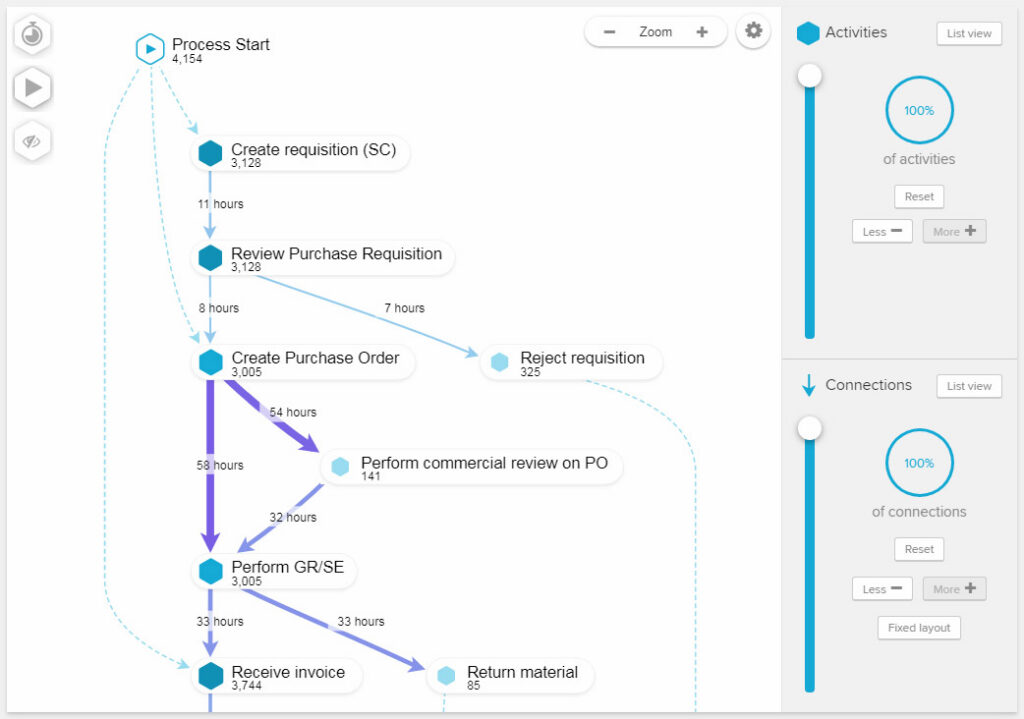
When data is used to rebuild real process flows, the result is a precise, evidence‑based view of your operations across time, cost, and variation.
This approach — often referred to as process mining — makes it possible to:
- see every process variant, not just the “happy path”
- identify bottlenecks and rework loops
- trace problems back to specific root causes
Once this foundation is in place, the question becomes where to apply it first. Below are four supply chain domains where data-driven process intelligence delivers clear impact.
1. Inventory & procurement: from buffers to root causes
Inventory sits at the crossroads of procurement, production, and fulfilment. Poor decisions here immediately affect working capital and service levels.
Your SAP Materials Management data already contains what you need:
- purchase orders and goods receipts
- stock movements and lead times
- supplier performance history
By analysing this data at process level, you can reconstruct the full procurement cycle — from requisition to receipt — and see exactly where delays or exceptions inflate lead times.
Instead of compensating with higher safety stock, you can:
- fix the root causes of slow procurement
- reduce buffers without increasing risk
- base reorder logic on actual demand and variability
The result is better availability with less inventory, driven by facts rather than assumptions.
2. Order fulfilment: turning OTIF into a controllable metric
From the customer’s perspective, fulfilment success comes down to one thing: On-Time In-Full (OTIF).
SAP Sales and Distribution data captures every step of the order-to-delivery flow, including:
- order creation and confirmation
- delivery and goods issue
- billing
When this data is analysed as a process, it becomes clear where OTIF failures originate:
- order processing delays
- warehouse execution issues
- handover problems with carriers
Instead of treating OTIF as a single KPI, you gain actionable insight into which steps need attention. This makes it easier to improve delivery reliability, reduce disputes, and protect customer satisfaction — especially in high‑expectation logistics environments.
3. Warehouse operations: turning EWM data into real-time decisions
The warehouse is where plans meet reality — and where data can have immediate operational impact.
SAP Extended Warehouse Management continuously generates data on:
- picking and task execution
- exception handling
- labour activities and yard movements
When this data is used only for reporting, much of its value is lost. When analysed at process level, it enables you to:
- identify inefficient pick paths
- understand why exceptions occur
- trace delays back to configuration, data, or workforce planning issues
This level of insight goes far beyond traditional dashboards. It supports day‑to‑day decision-making, improves execution quality, and helps warehouses operate with greater predictability and accuracy.
4. Transportation management: making logistics performance visible
Transportation is often one of the largest cost components in the supply chain. Small improvements can have a significant financial impact.
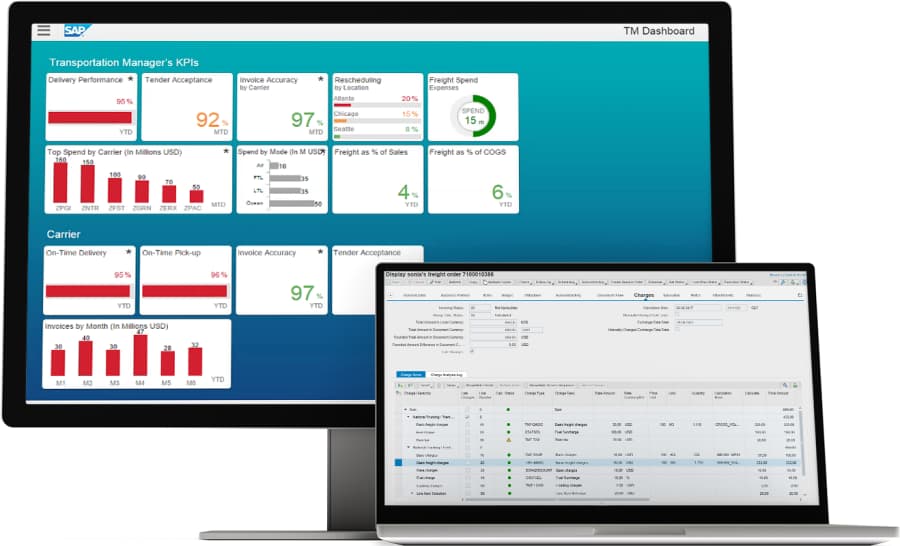
SAP Transportation Management data supports:
- freight planning and carrier selection
- route optimisation
- delivery performance tracking
Modern TM analytics make it possible to see the real-time impact of planning decisions, rather than evaluating results after the fact. This helps planners balance cost, service, and sustainability more effectively.
In addition, logistics data is increasingly used to:
- monitor emissions per shipment
- support regulatory reporting
- turn compliance data into optimisation insight
Transportation data is no longer just operational — it is strategic.
What this means in practice
Across inventory, fulfilment, warehousing, and transportation, the approach is consistent:
- Use your existing data to reconstruct how processes actually run
- Identify bottlenecks and unwanted variants
- Understand the root causes, not just the symptoms
- Apply targeted improvements in process design, configuration, or planning logic
What has changed recently is how fast and how deeply these steps can be executed within modern SAP landscapes. Data-driven supply chain improvement is no longer a future ambition — it is available now for organisations ready to use their data effectively.
Want to see what your own supply chain data is really telling you?
Get in touch to explore how data-driven process intelligence can help improve efficiency, reliability, and control across your SAP supply chain.