Introduction
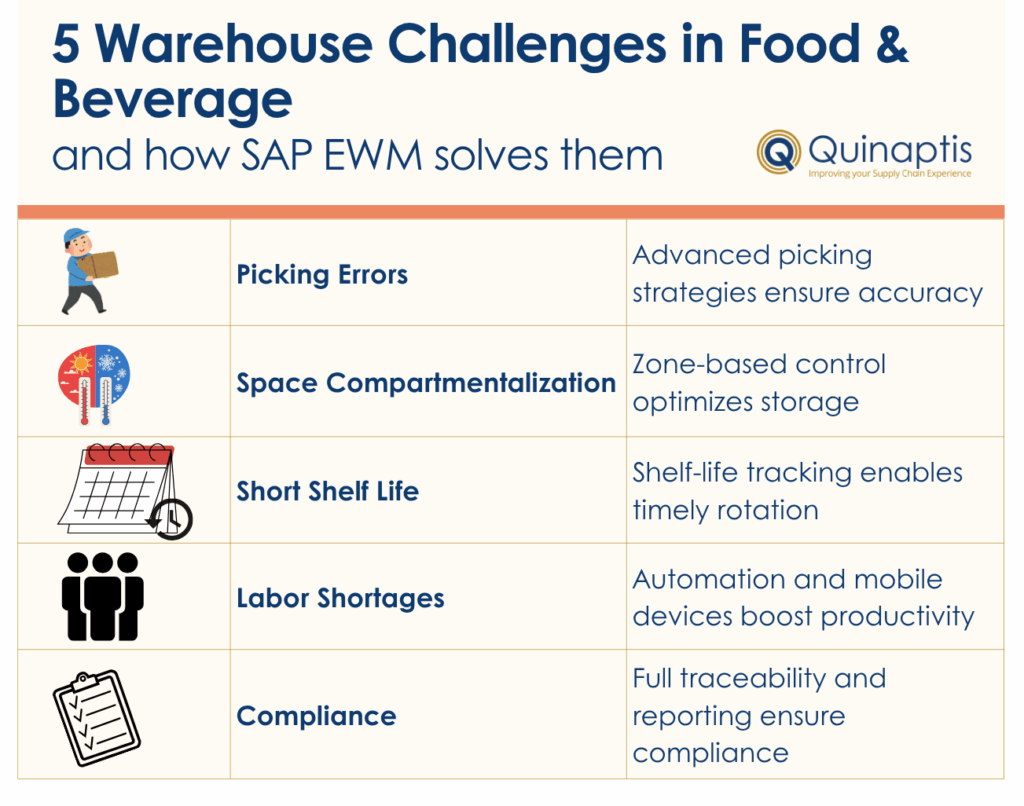
Food & Beverage (F&B) warehouses operate under intense pressure: strict regulations, short shelf life, and razor-thin margins. A single error—like a mispicked pallet—can lead to expired goods, wasted revenue, and unhappy customers. To stay competitive, companies need more than manual processes; they need intelligent automation. That’s where SAP Extended Warehouse Management (EWM) comes in.
Challenge 1: Picking Errors That Cost More Than You Think
In F&B, a wrong pick isn’t just an inconvenience—it can be a financial disaster. If goods with an earlier best-before date are shipped by mistake, they often expire before they can be returned. This means lost product, lost revenue, and potential compliance issues.
How SAP EWM Helps:
- Advanced picking strategies (FIFO, FEFO) ensure the right product leaves the warehouse first.
- Real-time validation reduces human error.
- Integration with batch and shelf-life data prevents costly mistakes.
Challenge 2: Space Compartmentalization for Cold, Frozen, and Dry Goods
Unlike other industries, F&B warehouses must manage multiple temperature zones—cold, frozen, and ambient. Poor compartmentalization leads to inefficiencies, higher energy costs, and compliance risks.
How SAP EWM Helps:
- Zone-based storage control optimizes space allocation.
- Automated put-away rules ensure goods are stored in the correct temperature zone.
- Real-time monitoring helps maintain compliance with HACCP and IFS standards.
Challenge 3: Managing Short Shelf Life
Every day counts when products have a limited shelf life. Overstocking leads to waste; understocking risks lost sales.
How SAP EWM Helps:
- Shelf-life expiration date (SLED) tracking ensures timely rotation.
- Dynamic replenishment prevents stockouts without overstocking.
- Integration with demand forecasts reduces waste.
Challenge 4: Labour Shortages and Rising Costs
Manual processes are labour-intensive and error-prone. With labour costs rising, efficiency is critical.
How SAP EWM Helps:
- Task interleaving and labour management tools optimize workforce productivity.
- Automation reduces dependency on manual labour.
- Mobile RF devices streamline operations.
Challenge 5: Compliance and Traceability
Regulatory compliance in F&B is non-negotiable. From HACCP to BRC, traceability is key.
How SAP EWM Helps:
- Full batch traceability from supplier to customer.
- Automated compliance reporting.
- Integration with SAP S/4HANA for end-to-end visibility.
Case in Point
A leading European food manufacturer reduced picking errors significantly and improved space utilization after implementing SAP EWM with our team’s guidance.